Hay amplia evidencia de que los polemistas anticristianos afirmaron que el verdadero padre de Jesús no era ni Dios ni José, sino un soldado romano llamado Pantera. Esto fue descartado durante mucho tiempo por ser ahistórico, pero durante el siglo pasado, algunos interlocutores han argumentado que la polémica puede tener credibilidad, y algunos han llegado incluso a identificar a Pantera con un tal Tiberio Julio Abdes Pantera, un arquero romano.
Una larga tradición en la tradición judía afirma que un soldado romano llamado Pantera (o Panthera, o Pandera) era el verdadero padre de Jesús. Esta afirmación aparece por primera vez en la obra del filósofo pagano Celso, quien escribió una polémica contra los cristianos y probablemente aprendió la historia de informantes judíos del siglo II d.C. Quizás fue más notorio por su aparición en el evangelio satírico anticristiano, el Toledot Yeshu de la Edad Media. Hoy en día, eruditos como James Tabor toman en serio la historia, quienes afirman que la historia podría ser una prueba de los verdaderos orígenes del cristianismo. Tabor sostiene además que la Pantera de la leyenda puede identificarse con un soldado romano que murió en Alemania y cuya lápida fue descubierta en 1859. “Me convencí de que la posible conexión de este soldado romano con las tradiciones relacionadas con el padre de Jesús no debería descartarse. descartado de plano sólo porque suena ofensivo para la piedad y la fe”, escribió en The Jesus Dynasty en 2006.
Pero volvamos ahora a donde se presenta al judío, hablando de la madre de Jesús, y diciendo que “cuando estaba embarazada, el carpintero con quien estaba desposada la echó fuera, por haber sido culpable de adulterio, y que le dio un hijo a cierto soldado llamado Panthera;” y veamos si aquellos que han inventado ciegamente estas fábulas sobre el adulterio de la Virgen con Panthera y su rechazo por el carpintero, no inventaron estas historias para anular su milagrosa concepción por obra del Espíritu Santo: porque podrían haber falsificado la historia. de manera diferente, debido a su carácter extremadamente milagroso, y no haber admitido, por así decirlo contra su voluntad, que Jesús no nació de un matrimonio humano común y corriente. Era de esperarse, de hecho, que aquellos que no creyeran en el nacimiento milagroso de Jesús inventarían alguna falsedad. Y el hecho de que no lo hicieran de una manera creíble, sino que preservaran el hecho de que no fue por José que la Virgen concibió a Jesús, hizo que la falsedad fuera muy palpable para aquellos que pueden entender y detectar tales invenciones.
¿Es en absoluto agradable a la razón que quien se atrevió a hacer tanto por el género humano, para que, en la medida de sus posibilidades, todos los griegos y bárbaros, que esperaban la condenación divina, pudieran apartarse del mal, y regular toda su conducta de manera agradable al Creador del mundo, ¿no debería haber tenido un nacimiento milagroso, sino el más vil y vergonzoso de todos? Y les preguntaré como griegos, y particularmente a Celso, que comparte o no los sentimientos de Platón, y en todo caso los cita, si Aquel que envía almas a los cuerpos de los hombres degradó a Aquel que se atrevió a semejante cosa. actos poderosos, y enseñar a tantos hombres, y reformar a tantos de la masa de maldad en el mundo, a un nacimiento más vergonzoso que cualquier otro, y no lo introdujo en el mundo a través de un matrimonio legítimo? ¿O no es más conforme a la razón que cada alma, por ciertas razones misteriosas (hablo ahora según la opinión de Pitágoras, Platón y Empédocles, a quienes Celso nombra con frecuencia), sea introducida en un cuerpo, e introducida según la razón? a sus desiertos y acciones pasadas? Es probable, por tanto, que también esta alma, que con su residencia en la carne confería más beneficio que la de muchos hombres (para evitar prejuicios, no digo “todos”), tuviera necesidad de un cuerpo no sólo superior a otros, pero revestidos de todas excelentes cualidades.
Christie Andersen, profesora y especialista en medios, tiene un estilo de escritura inspirador y cautivador. Mientras se desempeñaba como educadora durante los últimos siete años, Andersen se ha centrado en convertir a sus estudiantes en la próxima generación de líderes.
Anyone bring up the idea that Pantera (from both Latin and Greek) means literally “Panther” or Lion, (Mountain Lions often being called panthers) as in the “Lion” of Judah, I.e., the House of David? Also, what about the idea that “Virgin,” or pure birth, is just another way of saying Mary wasn’t a hoe? Lastly, why would God giving Mary a heads up that she was carrying the vessel of God, be taken as a sign that God is limited by physical biology and didn’t fully become present in Jesus until his Baptism like most mortals have to go through? So many questions seem to get dodged in the attempt to be “Scholarly” or “Religious”
Marc Allegro refers to this name in his infamous book “The holy mushroom & the cross”. Dionysus was often depicted as sitting on a panther. He is the god that emanated from the ingestion of the brown (very toxic) Amanita variant, which looks like a brown skin with white dots on it. The lore around magic mushrooms is much more ancient than christianity itself, and is littred with examples of gods & godesses (often twins) that were born out of a virgin impregnated by Zeus’ flashing spirit (lightning). The oak was one of the sacred trees in antiquity, next to the ceder, birch and the spar, as these are trees hosting the Amanita mushroom.
Did Jesus have a human father ? I suspect his father was a guy named Joseph, who happened to be the boyfriend of his mother. But because they weren’t married, Mary made up the story that an Angel had done it.
When Jesus refers to his heavenly father’s house he says the sky is his throne the earth his footstool, when he refers to the temple as his father’s house,his biological father, as a child he tells his mother not Joseph, I must be about my father’s work biological father.
Very Interesting the idea that the father of Jesus was a Roman soldier. That MUST have been seized on for the plot of The Life Of Brian, in which Brian’s father is a Roman soldier. (Possibly Biggus Dickus, but I would have to re-watch the movie to check.) Possibly even it strikes too close and that is why the movie raised the hackles of the intellectual Malcolm Muggeridge (who was apparently quite a clever guy, based on some excerpts I read from his autobiography, but was easily taken in by his own religious bias, eg claiming a nunnery was bathed in supernatural light, when in fact it was known that new experimental high-ASA film was used to film inside it). Anyway a number of separate clues were mentioned here and there, so surely any theologian would be able to put 2 and 2 together? So why don’t they? Either there is evidence to the contrary. Or they do not WANT to put 2 and 2 together because it destroys a convenient cosy and very central feature of the religion, an inescapably fundamental tenet of the faith, without which it falls apart. One can imagine Muggeridge vehemently objecting to the idea of a non-virgin birth. (Or does it fall apart? Does anyone with a clue about science, and who has remained a believer, actually believe in a virgin birth?)
T. Iulius Abdes Pantera was apparently from Sidon, so his name ‘Abdes’ is probably a graecised version of the Phoenician ‘Abd-Eshmoun’, ‘slave of Eshmoun’.
Κάποτε διάβασα κάπου — και για τη ζωή μου δεν μπορώ να θυμηθώ πού — μια ερμηνεία για το «Pantera» προέρχεται από το αιγυπτιακό «pa neteru», που σημαίνει κάτι σαν «Οίκος του (του) Θεού», ένας τρόπος αναφέρεται σε μια μεγαλόσωμη περούκα, ένα εξυψωμένο άτομο που μπορεί να ήταν από βασιλικό αίμα. Η θεωρία μπορεί να είχε κάποια σχέση με τη λατρεία του Ατεν του Ακενατόν και την υποτιθέμενη σχέση της με την ιστορία του Μωυσή. Στα εβραϊκά υπάρχει μια λέξη που γράφεται N-T-R [το «T» είναι Teth, όχι Taw], που σημαίνει κάτι σαν «Φύλακας» ή «Παρατηρητής» ή «Συνεχιστής», που μπορεί να υποδηλώνει τη δυναστική συνέχεια ή την ιδέα της διατήρησης γενεαλογικών αρχείων που σχετίζεται με μια σημαντική γραμμή αίματος ή διατηρώντας μια τέτοια γραμμή αίματος, η εβραϊκή λέξη υποτίθεται ότι είναι ένας αιγυπτιακός όρος [neteru] που υιοθετήθηκε στο εβραϊκό λεξιλόγιο. Δεν μπορούσα να πω αν αυτό είναι εύλογο ή εφικτό, αλλά υπήρξαν κάποιοι που πιστεύουν ότι ο Ακενατόν ήταν η βάση για τον βιβλικό Μωυσή και ότι ο περίφημος Χάλκινος κύλινδρος είχε κάποια σχέση με τη διατήρηση του «αιρετικού» Αιγυπτίου Aten-λατρεία έξω από το έδαφος της Αιγύπτου στη γειτονική Χαναάν. Ας μην ξεχνάμε ότι ο Ιωσήφ (γιος του Ιακώβ/Ισραήλ) ήταν παντρεμένος με μια Αιγύπτια που τον γέννησε τον Εφραίμ και τον Μανασσή, τους οποίους ο Ισραήλ υιοθέτησε ως γιους του, που ήταν οι «πατέρες» των δύο βόρειων φυλών που έγιναν συνώνυμες με τις βόρειες φυλές. το βασίλειο του Ισραήλ μετά τη διάσπαση από το νότιο Δαυιδικό βασίλειο του Ιούδα στους μετασολομονικούς χρόνους. Εάν η σύζυγος του πατριάρχη Ιωσήφ ήταν από αιγυπτιακό βασιλικό αίμα, τότε σίγουρα αυτό το χαρακτηριστικό θα λατρεύονταν από τους γιους της, και θα μπορούσε κάλλιστα να οφείλεται στο ότι υπήρχε κάποιο είδος αντιπαλότητας με την μετέπειτα Δαβιδική δυναστεία που κατέβηκε μέσω του Ιούδα [το «Σκήπττρο»], με Ο Ιεροβοάμ ίσως ήταν εκείνης της εφραιμικής αιγυπτιακής βασιλικής καταγωγής. Ετσι . . . ΑΝ ΥΠΗΡΧΕ όντως ένας ιστορικός Ιησούς, τότε ίσως η πραγματική του γενεαλογία να περιλάμβανε μια συγχώνευση του βασιλικού αιγυπτιακού αίματος που μεταβιβάστηκε μέσω της συζύγου του Ιωσήφ στους χρόνους της Προ-Έξοδος σε αυτόν τον «Pantera»/«Pa neteru», με τη βασιλική δαβιδική γραμμή αίματος που μεταβιβάστηκε. μέσω του Δαβίδ μέχρι τη Μαρία. Ίσως υπήρχαν τότε κάποιοι Εβραίοι που πίστευαν ότι ο Αιγύπτιος φαραώ την εποχή του Ιωσήφ ήταν λάτρης του θεού Ατόν, που εβραϊζόταν σε Adonai [«Κύριος»] — ίσως από την ίδια την οικογένεια του Ακενατόν, αν υπάρχει κάτι αυτή η θεωρία σχετικά με τον Μωυσή και τον Μονοθεϊσμό.
“Abdes” is supposed to be a Latinization of “Ebed” which is a Jewish name. That leads to the idea that J. Tiberius Abdes Pantera was actually a Jewish man who enlisted in the Roman Army. Times were hard in Roman occupied Israel, and young Ebed may have decided to put his archery skills to use by enlisting in the occupying army. He may also have been acquainted with a young Jewish girl by the name of Miriam. However, once Ebed enlisted in the army of the occupying country, he would have become persona non grata in Jewish society. Then, when young Miriam turned up in a family way, society naturally assumed the worst. Marriage to Ebed was out of the question, so Miriam’s parents pawned her off to a much older carpenter whose wife had died.

♦
Hay amplia evidencia de que los polemistas anticristianos afirmaron que el verdadero padre de Jesús no era ni Dios ni José, sino un soldado romano llamado Pantera. Esto fue descartado durante mucho tiempo por ser ahistórico, pero durante el siglo pasado, algunos interlocutores han argumentado que la polémica puede tener credibilidad, y algunos han llegado incluso a identificar a Pantera con un tal Tiberio Julio Abdes Pantera, un arquero romano.
Una larga tradición en la tradición judía afirma que un soldado romano llamado Pantera (o Panthera, o Pandera) era el verdadero padre de Jesús. Esta afirmación aparece por primera vez en la obra del filósofo pagano Celso, quien escribió una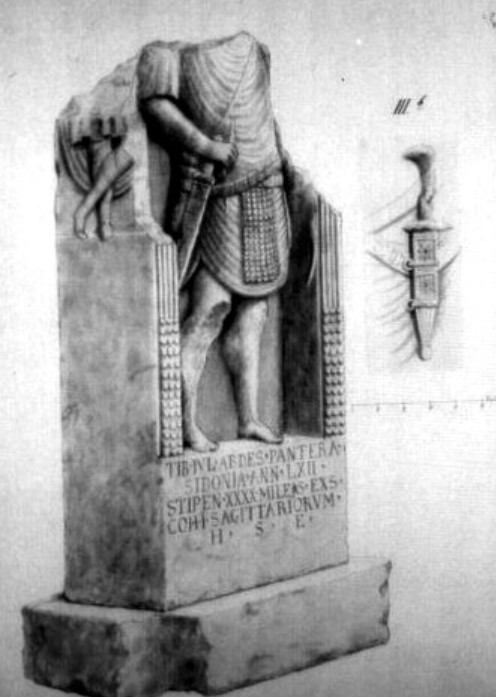 polémica contra los cristianos y probablemente aprendió la historia de informantes judíos del siglo II d.C. Quizás fue más notorio por su aparición en el evangelio satírico anticristiano, el Toledot Yeshu de la Edad Media. Hoy en día, eruditos como James Tabor toman en serio la historia, quienes afirman que la historia podría ser una prueba de los verdaderos orígenes del cristianismo. Tabor sostiene además que la Pantera de la leyenda puede identificarse con un soldado romano que murió en Alemania y cuya lápida fue descubierta en 1859. “Me convencí de que la posible conexión de este soldado romano con las tradiciones relacionadas con el padre de Jesús no debería descartarse. descartado de plano sólo porque suena ofensivo para la piedad y la fe”, escribió en The Jesus Dynasty en 2006.
Pero volvamos ahora a donde se presenta al judío, hablando de la madre de Jesús, y diciendo que “cuando estaba embarazada, el carpintero con quien estaba desposada la echó fuera, por haber sido culpable de adulterio, y que le dio un hijo a cierto soldado llamado Panthera;” y veamos si aquellos que han inventado ciegamente estas fábulas sobre el adulterio de la Virgen con Panthera y su rechazo por el carpintero, no inventaron estas historias para anular su milagrosa concepción por obra del Espíritu Santo: porque podrían haber falsificado la historia. de manera diferente, debido a su carácter extremadamente milagroso, y no haber admitido, por así decirlo contra su voluntad, que Jesús no nació de un matrimonio humano común y corriente. Era de esperarse, de hecho, que aquellos que no creyeran en el nacimiento milagroso de Jesús inventarían alguna falsedad. Y el hecho de que no lo hicieran de una manera creíble, sino que preservaran el hecho de que no fue por José que la Virgen concibió a Jesús, hizo que la falsedad fuera muy palpable para aquellos que pueden entender y detectar tales invenciones.
¿Es en absoluto agradable a la razón que quien se atrevió a hacer tanto por el género humano, para que, en la medida de sus posibilidades, todos los griegos y bárbaros, que esperaban la condenación divina, pudieran apartarse del mal, y regular toda su conducta de manera agradable al Creador del mundo, ¿no debería haber tenido un nacimiento milagroso, sino el más vil y vergonzoso de todos? Y les preguntaré como griegos, y particularmente a Celso, que comparte o no los sentimientos de Platón, y en todo caso los cita, si Aquel que envía almas a los cuerpos de los hombres degradó a Aquel que se atrevió a semejante cosa. actos poderosos, y enseñar a tantos hombres, y reformar a tantos de la masa de maldad en el mundo, a un nacimiento más vergonzoso que cualquier otro, y no lo introdujo en el mundo a través de un matrimonio legítimo? ¿O no es más conforme a la razón que cada alma, por ciertas razones misteriosas (hablo ahora según la opinión de Pitágoras, Platón y Empédocles, a quienes Celso nombra con frecuencia), sea introducida en un cuerpo, e introducida según la razón? a sus desiertos y acciones pasadas? Es probable, por tanto, que también esta alma, que con su residencia en la carne confería más beneficio que la de muchos hombres (para evitar prejuicios, no digo “todos”), tuviera necesidad de un cuerpo no sólo superior a otros, pero revestidos de todas excelentes cualidades.
Christie Andersen, profesora y especialista en medios, tiene un estilo de escritura inspirador y cautivador. Mientras se desempeñaba como educadora durante los últimos siete años, Andersen se ha centrado en convertir a sus estudiantes en la próxima generación de líderes.
PrisioneroEnArgentina.com
Enero 25, 2024
28 thoughts on “Pantera”
-

- itprimejobs.com
- posted on August 13, 2026
-

- 1gocasinotest.onlinespielhallende.workers.dev
- posted on August 13, 2026
-

- http://sc.afcd.gov.hk/
- posted on August 13, 2026
-

- ask.ru
- posted on August 12, 2026
-

- https://protect-all.com/
- posted on August 9, 2026
-

- https://forums.darknestfantasy.com
- posted on August 8, 2026
-

- https://jinja-modoki.com/
- posted on August 6, 2026
-

- https://s3.amazonaws.com/new-casino/Bet-Casino-Bewertung.html
- posted on August 2, 2026
-

- Mike Mann
- posted on January 25, 2024
-

- Solomon Sampson
- posted on January 25, 2024
-

- G.G. Haggart
- posted on January 25, 2024
-

- Alex Altman
- posted on January 25, 2024
-

- Art Gabler
- posted on January 25, 2024
-

- Brain
- posted on January 25, 2024
-

- Timothy Garfield
- posted on January 25, 2024
-

- Trent London
- posted on January 25, 2024
-

- Mike Unger
- posted on January 25, 2024
-

- Glenn Karios
- posted on January 25, 2024
-

- Βασίλης Νικολαΐδης
- posted on January 25, 2024
-

- Carlos Montenegro
- posted on January 25, 2024
-

- Ray_Nichols_74
- posted on January 25, 2024
-

- Juan de Dios Montenegro
- posted on January 11, 2025
-

- Joe Harper
- posted on January 25, 2024
-

- Angela Molina
- posted on January 25, 2024
-

- Juan de Dios Montenegro
- posted on January 11, 2025
-

- Intrigante
- posted on January 25, 2024
-

- Intrigante
- posted on January 25, 2024
-

- Sonia
- posted on January 27, 2024
CommentReferences:
Erwin Casino App itprimejobs.com
References:
Blackjack download 1gocasinotest.onlinespielhallende.workers.dev
References:
Vulkan Spiele Casino Bonus http://sc.afcd.gov.hk/
References:
Nv1 Casino Erfahrungen ask.ru
References:
Levant Casino Auszahlung https://protect-all.com/
References:
Billybets Casino App https://forums.darknestfantasy.com
References:
Grand Casino Login https://jinja-modoki.com/
References:
Royal Casino Erfahrungen https://s3.amazonaws.com/new-casino/Bet-Casino-Bewertung.html
It certainly quite a cold case, with no hope of solution. But interesting none the less.
Anyone bring up the idea that Pantera (from both Latin and Greek) means literally “Panther” or Lion, (Mountain Lions often being called panthers) as in the “Lion” of Judah, I.e., the House of David? Also, what about the idea that “Virgin,” or pure birth, is just another way of saying Mary wasn’t a hoe? Lastly, why would God giving Mary a heads up that she was carrying the vessel of God, be taken as a sign that God is limited by physical biology and didn’t fully become present in Jesus until his Baptism like most mortals have to go through? So many questions seem to get dodged in the attempt to be “Scholarly” or “Religious”
So his father wasn’t Donald Trump???
Marc Allegro refers to this name in his infamous book “The holy mushroom & the cross”. Dionysus was often depicted as sitting on a panther. He is the god that emanated from the ingestion of the brown (very toxic) Amanita variant, which looks like a brown skin with white dots on it. The lore around magic mushrooms is much more ancient than christianity itself, and is littred with examples of gods & godesses (often twins) that were born out of a virgin impregnated by Zeus’ flashing spirit (lightning). The oak was one of the sacred trees in antiquity, next to the ceder, birch and the spar, as these are trees hosting the Amanita mushroom.
I have thought this quite possible since I saw the plate of Panthera’s grave
Did Jesus have a human father ?
I suspect his father was a guy named Joseph, who happened to be the boyfriend of his mother.
But because they weren’t married, Mary made up the story that an Angel had done it.
When Jesus refers to his heavenly father’s house he says the sky is his throne the earth his footstool, when he refers to the temple as his father’s house,his biological father, as a child he tells his mother not Joseph, I must be about my father’s work biological father.
Very Interesting the idea that the father of Jesus was a Roman soldier. That MUST have been seized on for the plot of The Life Of Brian, in which Brian’s father is a Roman soldier. (Possibly Biggus Dickus, but I would have to re-watch the movie to check.) Possibly even it strikes too close and that is why the movie raised the hackles of the intellectual Malcolm Muggeridge (who was apparently quite a clever guy, based on some excerpts I read from his autobiography, but was easily taken in by his own religious bias, eg claiming a nunnery was bathed in supernatural light, when in fact it was known that new experimental high-ASA film was used to film inside it). Anyway a number of separate clues were mentioned here and there, so surely any theologian would be able to put 2 and 2 together? So why don’t they? Either there is evidence to the contrary. Or they do not WANT to put 2 and 2 together because it destroys a convenient cosy and very central feature of the religion, an inescapably fundamental tenet of the faith, without which it falls apart. One can imagine Muggeridge vehemently objecting to the idea of a non-virgin birth. (Or does it fall apart? Does anyone with a clue about science, and who has remained a believer, actually believe in a virgin birth?)
T. Iulius Abdes Pantera was apparently from Sidon, so his name ‘Abdes’ is probably a graecised version of the Phoenician ‘Abd-Eshmoun’, ‘slave of Eshmoun’.
Probably.
Κάποτε διάβασα κάπου — και για τη ζωή μου δεν μπορώ να θυμηθώ πού — μια ερμηνεία για το «Pantera» προέρχεται από το αιγυπτιακό «pa neteru», που σημαίνει κάτι σαν «Οίκος του (του) Θεού», ένας τρόπος αναφέρεται σε μια μεγαλόσωμη περούκα, ένα εξυψωμένο άτομο που μπορεί να ήταν από βασιλικό αίμα.
Η θεωρία μπορεί να είχε κάποια σχέση με τη λατρεία του Ατεν του Ακενατόν και την υποτιθέμενη σχέση της με την ιστορία του Μωυσή. Στα εβραϊκά υπάρχει μια λέξη που γράφεται N-T-R [το «T» είναι Teth, όχι Taw], που σημαίνει κάτι σαν «Φύλακας» ή «Παρατηρητής» ή «Συνεχιστής», που μπορεί να υποδηλώνει τη δυναστική συνέχεια ή την ιδέα της διατήρησης γενεαλογικών αρχείων που σχετίζεται με μια σημαντική γραμμή αίματος ή διατηρώντας μια τέτοια γραμμή αίματος, η εβραϊκή λέξη υποτίθεται ότι είναι ένας αιγυπτιακός όρος [neteru] που υιοθετήθηκε στο εβραϊκό λεξιλόγιο. Δεν μπορούσα να πω αν αυτό είναι εύλογο ή εφικτό, αλλά υπήρξαν κάποιοι που πιστεύουν ότι ο Ακενατόν ήταν η βάση για τον βιβλικό Μωυσή και ότι ο περίφημος Χάλκινος κύλινδρος είχε κάποια σχέση με τη διατήρηση του «αιρετικού» Αιγυπτίου Aten-λατρεία έξω από το έδαφος της Αιγύπτου στη γειτονική Χαναάν. Ας μην ξεχνάμε ότι ο Ιωσήφ (γιος του Ιακώβ/Ισραήλ) ήταν παντρεμένος με μια Αιγύπτια που τον γέννησε τον Εφραίμ και τον Μανασσή, τους οποίους ο Ισραήλ υιοθέτησε ως γιους του, που ήταν οι «πατέρες» των δύο βόρειων φυλών που έγιναν συνώνυμες με τις βόρειες φυλές. το βασίλειο του Ισραήλ μετά τη διάσπαση από το νότιο Δαυιδικό βασίλειο του Ιούδα στους μετασολομονικούς χρόνους. Εάν η σύζυγος του πατριάρχη Ιωσήφ ήταν από αιγυπτιακό βασιλικό αίμα, τότε σίγουρα αυτό το χαρακτηριστικό θα λατρεύονταν από τους γιους της, και θα μπορούσε κάλλιστα να οφείλεται στο ότι υπήρχε κάποιο είδος αντιπαλότητας με την μετέπειτα Δαβιδική δυναστεία που κατέβηκε μέσω του Ιούδα [το «Σκήπττρο»], με Ο Ιεροβοάμ ίσως ήταν εκείνης της εφραιμικής αιγυπτιακής βασιλικής καταγωγής. Ετσι . . . ΑΝ ΥΠΗΡΧΕ όντως ένας ιστορικός Ιησούς, τότε ίσως η πραγματική του γενεαλογία να περιλάμβανε μια συγχώνευση του βασιλικού αιγυπτιακού αίματος που μεταβιβάστηκε μέσω της συζύγου του Ιωσήφ στους χρόνους της Προ-Έξοδος σε αυτόν τον «Pantera»/«Pa neteru», με τη βασιλική δαβιδική γραμμή αίματος που μεταβιβάστηκε. μέσω του Δαβίδ μέχρι τη Μαρία. Ίσως υπήρχαν τότε κάποιοι Εβραίοι που πίστευαν ότι ο Αιγύπτιος φαραώ την εποχή του Ιωσήφ ήταν λάτρης του θεού Ατόν, που εβραϊζόταν σε Adonai [«Κύριος»] — ίσως από την ίδια την οικογένεια του Ακενατόν, αν υπάρχει κάτι αυτή η θεωρία σχετικά με τον Μωυσή και τον Μονοθεϊσμό.
Esto es blasfemia. Jesus es hijo de Dios y punto.
Just like that? Can you elaborate…?
jajajaja. No hay peor ciego que el que no quiere ver!
“Abdes” is supposed to be a Latinization of “Ebed” which is a Jewish name. That leads to the idea that J. Tiberius Abdes Pantera was actually a Jewish man who enlisted in the Roman Army. Times were hard in Roman occupied Israel, and young Ebed may have decided to put his archery skills to use by enlisting in the occupying army. He may also have been acquainted with a young Jewish girl by the name of Miriam. However, once Ebed enlisted in the army of the occupying country, he would have become persona non grata in Jewish society. Then, when young Miriam turned up in a family way, society naturally assumed the worst. Marriage to Ebed was out of the question, so Miriam’s parents pawned her off to a much older carpenter whose wife had died.
Jesús fue real y es nuestro Padre. Nació de una virgen y su padre es Dios, nuestro señor.
JAJAJAJA. Ciegos, con el cerebro lavado!
Muy interesante.
Me quedé pensando……. es muy difícil lograr certezas y por otro lado, el Vaticano lo rechazará sin más.
Lo que no rechaza el Vaticano es la riqueza y la buena vida llena de placeres .