🔽 El filósofo y autor francés Jean-Paul Sartre, admirador de la Unión Soviética durante mucho tiempo, denuncia en noviembre de 1956 tanto a la URSS como a su sistema comunista tras la brutal invasión soviética de Hungría.
Jean-Paul Sartre, nacido en París en 1905, fue un destacado exponente del existencialismo, un movimiento filosófico que celebra la libertad de la existencia humana individual mientras lamenta su inherente falta de sentido. Autor de más de 20 novelas, obras de teatro y tratados filosóficos, Sartre rechazó el Premio Nobel de Literatura de 1964 con el argumento de que un escritor “debe negarse a permitir que lo transformen en una institución”. Sin embargo, Sartre fue una institución: primero como la voz del existencialismo y luego como la conciencia del comunismo.
Como estudiante en París y Berlín, Sartre estuvo muy influenciado por la filosofía alemana, en particular el existencialismo de Martin Heidegger y el método fenomenológico de Edmund Hussel, quien preconizaba una descripción cautelosa e imparcial sobre una deducción concisa. La primera gran obra de Sartre fue la novela Náuseas (1938), una narración de angustia existencial escrita en forma de diario. Otras obras existenciales importantes fueron Sin salida (1946) y El ser y la nada (1956).
Después del estallido de la Segunda Guerra Mundial en 1939, Sartre sirvió brevemente en el ejército francés antes de convertirse en prisionero de guerra de 1940 a 1941. Después de su liberación, se instaló en el París ocupado por los nazis, donde enseñó, escribió y conspiró con los nazis. Resistencia francesa. Fue durante la guerra que el marxismo se convirtió en el segundo amor intelectual de Sartre. Aunque nunca se unió al Partido Comunista Francés, fue uno de los comunistas más conocidos de Francia y, a menudo, habló en apoyo de la URSS y sus políticas. En 1954 visitó la Unión Soviética.
Tras la invasión de Hungría por las fuerzas soviéticas el 4 de noviembre de 1956, Sartre denunció la intervención soviética y la sumisión del Partido Comunista Francés a los dictados de Moscú. El 9 de noviembre, en la revista francesa L’Express, declaró: “Condeno la invasión soviética de todo corazón y sin reservas. Sin responsabilizar al pueblo ruso, insisto, no obstante, en que su gobierno actual ha cometido un crimen… Y el crimen, para mí, no es solo la invasión de Budapest por tanques del ejército, sino el hecho de que esto fue posible gracias a doce años de terror e imbecilidad… Es y será imposible restablecer cualquier tipo de contacto con los hombres que actualmente están al frente del [Partido Comunista Francés]. Cada frase que pronuncian, cada acción que realizan es la culminación de 30 años de mentiras y esclerosis”.
Aunque las esperanzas de Sartre por el comunismo fueron aplastadas, siguió defendiendo el marxismo y buscó desarrollar un nuevo tipo de socialismo en Search for a Method (1960). La ruptura final con la Unión Soviética se produjo en 1968 con la represión soviética de la “Primavera de Praga” de Checoslovaquia. Después de eso, la lealtad de Sartre pasó a los jóvenes revolucionarios en Francia, y en ocasiones se desempeñó como editor titular de pequeños periódicos radicales. Su última obra importante fue un monumental estudio en cuatro volúmenes del novelista francés del siglo XIX Gustave Flaubert. Jean-Paul Sartre murió en 1980 y a su funeral asistieron 25.000 personas.
PrisioneroEnArgentina.com
Noviembre 9, 2022
6 thoughts on “Cuando Jean-Paul Sartre denunció el comunismo”
The REAL choice is not that of Marxism v Democracy, Democracy v Monarchy, Monarchy v Marxism. The REAL choice is between society ordered and organized by way of neutral, emergent, contingent institutions selected for by way of processes of cultural selection outside intentionality, language for instance – and the class of deliberately devised and deployed institutions, in particular the politico-military institution of which monarchy, democracy, and Marxism are instances. The problem has been perfectly dramatized in the events which have unfolded in the ongoing geopolitical power struggles. Now Michel Foucault drew the line between the feudal European warlord and the modern state this way: For the feudal warlord the goal was to seize prosperous, productive territories in order to extract wealth by taxation. People and property were off limits, were not legitimate military targets – as the whole point of war was to impose yourself as monopoly tax authority over a territory. You are incentivized to preserve the ‘means of production’ the more from it you can extract. In sharp contrast, in the discourse of the modern nation state Foucault tells us, the goal is just the opposite. You want to weaken and if necessary destroy any state viewed as a competitor. In the discourse of the nation state, the contents of a nation state are bundled together. Its civilian population, its industry, its military, and its infrastructure are viewed as components comprising the totality of an adversary state. In nation state discourse therefore, any of these components become legitimate targets for one nation state confronting another. The nominal political structure floating atop a nation state is of little consequence. In WWII for instance you had two socialist states inflict horrific damage on each other in Germany v USSR. What the ongoing events of today have demonstrated is that 1945 marked the point at which battle lines were frozen in place rather than the point at which war had forever vanished as prominent figures like A. Einstein had hoped for at the time. And where historians are wont to place blame for war on key individuals, Foucault tells us this is a mistake. Rather war is an inherent feature of nation state discourse. It is the discourse of the nation state which produces the warmongering political actor. And so to bring it all back to the present: Foucault tells us that a strategy in nation state discourse is the formation of temporary, ad hoc, alliances among one group of nation states in order to subdue competitor nation states. We have seen just such an alliance form – an alliance among socialist, democratic, and monarchical nations states in order to try to subdue a loose alliance of democratic and socialist nation states. Now the crucial point for the anarcho capitalist is in the fact that the free market incentive system allowed former foes in WWII to cooperate, to integrate their societies along peaceful productive lines. One supplied vast quantities of cheap natural resources especially petrochemical products – which the other transformed into both capital goods and consumer goods. Now for the consumer this is the ideal situation, the era of peace and plenty. And yet toward the far end of the spectrum of nation state discourse, such a situation is an intolerable problem the solution for which turns out to be to block the flow of natural resources into the alliance of nation states: A short sharp stoppage of exports will cause the competitor nation state to collapse. Under new management exports will quickly resume. Such was the strategy – only it has all gone horribly wrong. It is the first alliance which now finds its own economy in collapse, and with it its grand scheme for a new green economy. There are stories today about Polish working class waiting in line for hours in order to purchase coal in the face of looming winter. The price of electricity has increased 5X. Industry is shutting down. The working class are being laid off. The mood across Europe is grim if not dire. The interventions against the free market by a collective of socialist, democratic, and monarchical political actors have not served to safeguard the consumer and the worker from the supposed depredations of the greedy, unfettered ‘capitalist’. To the contrary it is the interventions of the political class of the first alliance of nation states against the free market which have resulted in economic catastrophe.
Sarte spent his early career promoting existentialism, a form of radical individualism. He later claimed to be a communist, after WW2. His books on socialism were lousy and he is quickly becoming forgotten in France. Good riddance. Communist philosophy has no need for his takes.
🔽
El filósofo y autor francés Jean-Paul Sartre, admirador de la Unión Soviética durante mucho tiempo, denuncia en noviembre de 1956 tanto a la URSS como a su sistema comunista tras la brutal invasión soviética de Hungría.
Jean-Paul Sartre, nacido en París en 1905, fue un destacado exponente del existencialismo, un movimiento filosófico que celebra la libertad de la existencia humana individual mientras lamenta su inherente falta de sentido. Autor de más de 20 novelas, obras de teatro y tratados filosóficos, Sartre rechazó el Premio Nobel de Literatura de 1964 con el argumento de que un escritor “debe negarse a permitir que lo transformen en una institución”. Sin embargo, Sartre fue una institución: primero como la voz del existencialismo y luego como la conciencia del comunismo.
Como estudiante en París y Berlín, Sartre estuvo muy influenciado por la filosofía alemana, en particular el existencialismo de Martin Heidegger y el método fenomenológico de Edmund Hussel, quien preconizaba una descripción cautelosa e imparcial sobre una deducción concisa. La primera gran obra de Sartre fue la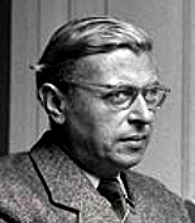 novela Náuseas (1938), una narración de angustia existencial escrita en forma de diario. Otras obras existenciales importantes fueron Sin salida (1946) y El ser y la nada (1956).
Después del estallido de la Segunda Guerra Mundial en 1939, Sartre sirvió brevemente en el ejército francés antes de convertirse en prisionero de guerra de 1940 a 1941. Después de su liberación, se instaló en el París ocupado por los nazis, donde enseñó, escribió y conspiró con los nazis. Resistencia francesa. Fue durante la guerra que el marxismo se convirtió en el segundo amor intelectual de Sartre. Aunque nunca se unió al Partido Comunista Francés, fue uno de los comunistas más conocidos de Francia y, a menudo, habló en apoyo de la URSS y sus políticas. En 1954 visitó la Unión Soviética.
Tras la invasión de Hungría por las fuerzas soviéticas el 4 de noviembre de 1956, Sartre denunció la intervención soviética y la sumisión del Partido Comunista Francés a los dictados de Moscú. El 9 de noviembre, en la revista francesa L’Express, declaró: “Condeno la invasión soviética de todo corazón y sin reservas. Sin responsabilizar al pueblo ruso, insisto, no obstante, en que su gobierno actual ha cometido un crimen… Y el crimen, para mí, no es solo la invasión de Budapest por tanques del ejército, sino el hecho de que esto fue posible gracias a doce años de terror e imbecilidad… Es y será imposible restablecer cualquier tipo de contacto con los hombres que actualmente están al frente del [Partido Comunista Francés]. Cada frase que pronuncian, cada acción que realizan es la culminación de 30 años de mentiras y esclerosis”.
Aunque las esperanzas de Sartre por el comunismo fueron aplastadas, siguió defendiendo el marxismo y buscó desarrollar un nuevo tipo de socialismo en Search for a Method (1960). La ruptura final con la Unión Soviética se produjo en 1968 con la represión soviética de la “Primavera de Praga” de Checoslovaquia. Después de eso, la lealtad de Sartre pasó a los jóvenes revolucionarios en Francia, y en ocasiones se desempeñó como editor titular de pequeños periódicos radicales. Su última obra importante fue un monumental estudio en cuatro volúmenes del novelista francés del siglo XIX Gustave Flaubert. Jean-Paul Sartre murió en 1980 y a su funeral asistieron 25.000 personas.
PrisioneroEnArgentina.com
Noviembre 9, 2022
6 thoughts on “Cuando Jean-Paul Sartre denunció el comunismo”
-
-

- My name is Earl
- posted on November 8, 2022
-

- elizabeth quarry
- posted on November 8, 2022
-

- brenda donaldson
- posted on November 8, 2022
-

- Century City Man
- posted on November 8, 2022
-

- Kristen Masayoshi
- posted on November 8, 2022
CommentPingback: ¿Somos realmente tan importantes? – Prisionero en Argentina
The REAL choice is not that of Marxism v Democracy, Democracy v Monarchy, Monarchy v Marxism. The REAL choice is between society ordered and organized by way of neutral, emergent, contingent institutions selected for by way of processes of cultural selection outside intentionality, language for instance – and the class of deliberately devised and deployed institutions, in particular the politico-military institution of which monarchy, democracy, and Marxism are instances. The problem has been perfectly dramatized in the events which have unfolded in the ongoing geopolitical power struggles. Now Michel Foucault drew the line between the feudal European warlord and the modern state this way: For the feudal warlord the goal was to seize prosperous, productive territories in order to extract wealth by taxation. People and property were off limits, were not legitimate military targets – as the whole point of war was to impose yourself as monopoly tax authority over a territory. You are incentivized to preserve the ‘means of production’ the more from it you can extract. In sharp contrast, in the discourse of the modern nation state Foucault tells us, the goal is just the opposite. You want to weaken and if necessary destroy any state viewed as a competitor. In the discourse of the nation state, the contents of a nation state are bundled together. Its civilian population, its industry, its military, and its infrastructure are viewed as components comprising the totality of an adversary state. In nation state discourse therefore, any of these components become legitimate targets for one nation state confronting another. The nominal political structure floating atop a nation state is of little consequence. In WWII for instance you had two socialist states inflict horrific damage on each other in Germany v USSR. What the ongoing events of today have demonstrated is that 1945 marked the point at which battle lines were frozen in place rather than the point at which war had forever vanished as prominent figures like A. Einstein had hoped for at the time. And where historians are wont to place blame for war on key individuals, Foucault tells us this is a mistake. Rather war is an inherent feature of nation state discourse. It is the discourse of the nation state which produces the warmongering political actor. And so to bring it all back to the present: Foucault tells us that a strategy in nation state discourse is the formation of temporary, ad hoc, alliances among one group of nation states in order to subdue competitor nation states. We have seen just such an alliance form – an alliance among socialist, democratic, and monarchical nations states in order to try to subdue a loose alliance of democratic and socialist nation states. Now the crucial point for the anarcho capitalist is in the fact that the free market incentive system allowed former foes in WWII to cooperate, to integrate their societies along peaceful productive lines. One supplied vast quantities of cheap natural resources especially petrochemical products – which the other transformed into both capital goods and consumer goods. Now for the consumer this is the ideal situation, the era of peace and plenty. And yet toward the far end of the spectrum of nation state discourse, such a situation is an intolerable problem the solution for which turns out to be to block the flow of natural resources into the alliance of nation states: A short sharp stoppage of exports will cause the competitor nation state to collapse. Under new management exports will quickly resume. Such was the strategy – only it has all gone horribly wrong. It is the first alliance which now finds its own economy in collapse, and with it its grand scheme for a new green economy. There are stories today about Polish working class waiting in line for hours in order to purchase coal in the face of looming winter. The price of electricity has increased 5X. Industry is shutting down. The working class are being laid off. The mood across Europe is grim if not dire. The interventions against the free market by a collective of socialist, democratic, and monarchical political actors have not served to safeguard the consumer and the worker from the supposed depredations of the greedy, unfettered ‘capitalist’. To the contrary it is the interventions of the political class of the first alliance of nation states against the free market which have resulted in economic catastrophe.
Sarte spent his early career promoting existentialism, a form of radical individualism. He later claimed to be a communist, after WW2. His books on socialism were lousy and he is quickly becoming forgotten in France. Good riddance. Communist philosophy has no need for his takes.
He had never renounced communists. He renounces USSR, that actually wasn’t socialist.
Not Communism, USSR only
Right on