Hannibal Barca (Anibal), un general púnico de Cartago (cerca de la actual Túnez), estuvo más cerca que nadie de derrotar al Imperio Romano. Hoy, Hannibal es conocido por algunos como el padre de la estrategia militar y uno de los más grandes comandantes militares que jamás haya existido.
En una monumental hazaña militar y campaña de iluminación, cruzó los Pirineos y los Alpes con más de 40.000 soldados y 30 elefantes de guerra. Luchó contra los romanos durante unos 15 años en su propio terreno durante la Segunda Guerra Púnica (218-202), siendo superado en número muchas veces. Sus principales victorias en Cannas, Trebia y el lago Trasimene consolidaron su reputación como enemigo a temer.
Nacido en 247 a. C. en Cartago, el joven Aníbal creció odiando a los romanos y ocupó el lugar de su cuñado, Asdrúbal, como comandante de las fuerzas cartaginesas-iberas. Pronto atravesó Iberia y la Galia, haciendo alianzas con tribus galas y tomando por sorpresa a los romanos cuando cruzó los Alpes. Destruyó cientos de pueblos a su paso y algunos de ellos se volvieron contra Roma. Sus tácticas de emboscadas, flanqueo y guerrilla cambiaron la batalla a su favor, lo que le permitió ganarse a generales muy respetados varias veces e infligir decenas de miles de bajas, mientras que solo perdió una fracción de las suyas.
En Cannas, flanqueó a decenas de miles de falanges romanas, aniquiló a más de 50.000 y solo perdió una décima parte. A pesar de este éxito, todavía no pudo llegar a Roma. Cartago no envió suficientes refuerzos y Fabio Máximo, un cónsul con poderes dictatoriales temporales, comenzó a librar una guerra de desgaste contra Aníbal. Un ataque a su ciudad natal en 203 hizo que fuera llamado y finalmente fue derrotado en 202 por Scipio Africanus en la batalla de Zama.
Después de algunos años como sufette y asesor militar de Antíoco III de Siria, Aníbal huyó al rey Prusias de Bitinia, donde presumiblemente se envenenó.
Managing an Edgenuity class can be challenging, especially for students balancing school with work, family responsibilities, or other commitments. Professional academic support can make online learning more organized and manageable. Students can receive help with understanding lessons, reviewing difficult topics, creating study schedules, preparing for assessments, and staying on track with course deadlines. Experienced tutors can explain challenging concepts in simple terms and provide guidance that helps students become more confident in their coursework. When choosing Edgenuity academic support, students should look for knowledgeable tutors, dependable communication, transparent pricing, and respect for privacy. It is also important to ensure that all assistance follows the academic integrity policies of the school or institution.
With the right support and consistent effort, students can better manage their Edgenuity coursework, improve their understanding of important subjects, and stay organized throughout the semester. Effective guidance can make online education less stressful and more productive.
¡¡Excelente escrito y didácticos comentarios llenos de erudición!!! da gusto ver a los diferentes autores y actores de u plexo cultural, deseado pero no presente en el pueblo argentino. Da gusto ver como jóvenes damas se sustenta en una base sólida cultural y el conocimiento de la Historia de la Civilización. Desconocer la historiografía es abundar e la brutalidad y el improperio. Siento que estas actitudes y conductas llenas de sabor cultural, so expuestas y me hace sentir fe e la creencia que o todo está perdido. Lamentablemente nuestra casta politiquera es abrumadoramente inmoral y bruta. Pues quiere que el pueblo sea cada vez mas bruto y dependiente del populismo y la demagogia. Baste ver lo que se les “enseña” a los adolescentes e los niveles del secundario…”politicos de barricada, descerebrados y concupiscentes de la idolatría de la vagancia y la contracultura del trabajo y el estudio. Muchas gracias por todas vuestras muestras didácticas culturales .Felicitaciones. “et Semper ad Astra” cshg.krieg.357m@gmail.com
Hannibal and his father are those type of historical legends that fall into myth. At the end of the Carthage era, it was because of political corruption that killed its own country. Not supporting one of their greatest generals, and then turning on him sealed the fate of the Carthage era. Had they backed Hannibal through his entire campaign, Carthage could’ve outlived Rome and probably still be around today.
For some reason I have always felt Hannibal was always more feared than even Alexander the Great I guess it was because he had the Roman Empire shook and there aren’t many people no matter the time in history who could have made the Romans feel threatened and as we still witness to this day His battle campaigns and strategies were second to none at least that is the impact his legacy still resonates in people’s minds to this day.just watching the movie when he is visited by that psychologist prevented me from shutting the lights off at night. .Well you get the idea!
Hannibal had three main components. First, he was a great tactician. He knew how to handle different type of forces and manoeuvre in the battle field. Second, he was good at motivating his males even they were from different countries. And third, he had insight into the minds of his opponents. He could think what they were thinking and exploit it against them.
Tunisia: Carthage is considered one of the most important civilizations known to the Mediterranean in the pre-Christian world, just like the Greek and Roman civilizations, as well as the Pharaonic ones. The center of this republic-imperial that prevailed in the Mediterranean for centuries is the city of Carthage, which is located in the north of Tunisia, not far from the Tunisian capital, which was founded nearly fifteen centuries after Carthage, but the latter was transformed by urban expansion into one of its suburbs.
Legend says that Carthage was founded by the Phoenician Princess Alice, as the Tunisians call her, or Elissar / Elisa, as it was termed in the East, or Didon, as Westerners call it. Alissa or Elissar came from the Lebanese city of Tyre, fleeing from her brother who killed her husband. It is said that there was a priest who told her that it was her destiny to establish a city opposite a mountain with two horns, so she wandered at sea until she reached what is called today the Gulf of Tunis, where the mountain of Dhul-Qarnayn is located. Mount Boukernin as it is called today). And the princess offered the local people to buy from them a plot of land the size of a bull’s skin, and she had what she wanted, and all she wanted was to cut the bull’s skin and turn it into a long, thin thread. Or Elissar, on a large area, on which her city of Carthage or “Qart Hadasht” was founded, meaning the modern village or the new city. And the new Mediterranean metropolis grew, grew, prospered, and excelled over the rest of the surrounding Phoenician cities in various fields, and it became an economic and military power that reads a thousand accounts. Rome became a young modern empire emerging after centuries of control of Carthage on the Mediterranean and it was necessary for the emerging modern power (Rome) to displace the aging empire (Carthage), which took its time and increase. Carthage controlled vast lands that extended over the entire northwestern African coast to the Strait of Gibraltar, which was called the Strait of Melqart, after the Carthaginian leader Abd Melqart Baraka, Hannibal’s father. Carthage also took control of the Iberian Peninsula, where it founded several cities, including Cartagena and Barcelona (in relation to the Carthaginian Barka family, from which Hannibal and his father Abd Melqart descended, as well as Sadr Baal al-Adel) and its influence reached southern France.
Carthage controlled important Mediterranean islands such as Greek Crete and Malta, as well as Sicily, Corsica, Sardinia and the Balearic. It reached the east to the Libyan Gulf of Sirte, where it signed a border agreement with the Greeks who controlled the Egyptian Mediterranean coast and eastern Libya.
Although it was at the end of its reign, Carthage fought three major wars against the Romans that lasted for many years and ended with the burning of Carthage at the hands of the Roman commander Sepion. These epics witnessed the emergence of great leaders who gained wide fame, including Abd Melkart Barca (Amilcar) and his son Hannibal, who crossed the Alps with his villa and his legions of armies and besieged Rome for nearly ten years and fought many battles on its borders, the most important of which was the famous Battle of Cannae. The Carthaginians noticed early and before others the importance of the African continent, so they sailed in the Atlantic Ocean, which the Arabs feared and called it the “Sea of Darkness” and established their settlements in West Africa along the African coast. Perhaps the most famous expedition is the journey of the traveler ruler Hanoun, which took place around the fifth century BC and was written down and became famous unlike the rest of the trips.
The Carthaginians also reached the British Isles across the Atlantic Ocean, as well as the North Sea on the borders of the Scandinavian countries in search of tin and everything that would benefit the empire. These trade trips were preceded by the famous campaign of the travellers, Carthage, which opened the door wide for the merchants of Carthage to expand their trade to include the north of the old continent across the sea. It is said that the Carthaginians also reached the American continent, in view of what was mentioned in some books of the Greeks, which spoke of a vast land beyond the ocean that was a source of the Carthaginian wealth. Carthaginian coins were also found containing an approximate image of a world map that includes a large land area located directly after the sea, which is supposed to be the Atlantic Ocean.
Science developed and flourished in Carthage, and this civilization gave birth to many scientists and thinkers. Perhaps the most famous of them all is the geneticist and agricultural scientist Magon, who composed an encyclopedia that the Romans relied on later and after the Carthaginians in developing their agricultural sciences. Regarding Magon’s Encyclopedia, Tunisian historian Muhammad Hussein Fantar says: “The encyclopedia that Magon wrote on agricultural affairs was in the Dar al-Kutub in Carthage, and perhaps copies of it were owned by some private people, especially those who were engaged in agriculture. Magoon’s Encyclopedia was not among the kind of books that remain on the shelves of libraries. Rather, it was a means of work that its owner would return to when needed. Perhaps some of its chapters were stuck in the rooms of the supervisors on the cultivation of the land, regardless of their specializations. When the Third Punic War and the fall of Carthage, Chebion Amelia Nuss ordered the house of books in Carthage to be looted and burned, and the books that had escaped from the burning fire were given to the Numidian kings and their princes, with the exception of the encyclopedia written by Magon in the sciences of agriculture, the Romans accounted for it and ordered their Senate to transfer it to The Latin language was appointed, and a committee of translators was appointed to supervise this work, which was shortened by Dionysius to the Greek tongue, and he dedicated his work to the governor of Africa at the time, Sextilius, and this took place in the year 88 BC. It should be noted that there is a third translation of Magon’s encyclopedia based on the translation of Diosnius Diovan made by Diovan the Nicaea, who contented himself with summarizing the text translated by Diosnius. The twenty parts were turned into 6 parts, and Diovan presented his work as a gift to King Deotarus, and the interest in Magon’s encyclopedia did not stop, but it seems that the summary made by Diovan was done in two parts and this work was done by the philosopher Phleon, who was studying in the city of Rome around 48 BC. Despite this care and this continuous interest in the episodes, only 66 paragraphs remain from Magon’s Encyclopedia, which were mentioned in the books of some agricultural scientists, including Ron Kolomala and Gergelius Marsalis the African who lived in the third century AD and others. In addition to all of them, a reference must be made to those who praised Magon and his writings, including the famous writer and the eloquent lawyer, Faqiron. It is proven that the encyclopedia was popular in the Roman circles, so those who wanted to write about agriculture had to return to it because of its benefits.It was stated in some chapters from the book of Wron that the supervisor of cow breeding was carrying with him extracts from the encyclopedia, so he dealt with how to treat bulls. And some of the ancients mentioned that the Roman poet Virgilius, when he wanted to write his poems about rural life, used the Magonian encyclopedia, which was a reference that the reader would find in the book houses and was one of the most important scientific books that the village is not without. and countryside. Many contemporary historians believe that the encyclopedia made an effective contribution to reviving the Italian economy, and it is likely that it crossed the ages until it reached Ibn al-Awwam al-Andalus.
I think Hannibal is my favorite historical figure of all, either him or Cyrus. He operated in hostile territory behind enemy lines, hundreds of miles away from any of his supply lines, in the heart of the most powerful nation on Earth, FOR 15 YEARS(!!!), and never lost a battle during that time! If his country had sent him the support and supplies he needed after Cannae, our world would be a very different place.
Hannibal may have failed in his lifetime, but so did Napoleon. Both won major victories (in Italy, no less), but both were eventually defeated and exiled. Still, as generals, they were greatly successful in that they left their mark on the science of warfare and are studied even to this day. Being a victor alone doesn’t guarantee that one will be studied; it depends on how one achieves victory, against what odds, and how long one was victorious, even if it eventually ends in defeat.

🏹
Hannibal Barca (Anibal), un general púnico de Cartago (cerca de la actual Túnez), estuvo más cerca que nadie de derrotar al Imperio Romano.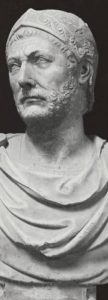 Hoy, Hannibal es conocido por algunos como el padre de la estrategia militar y uno de los más grandes comandantes militares que jamás haya existido.
En una monumental hazaña militar y campaña de iluminación, cruzó los Pirineos y los Alpes con más de 40.000 soldados y 30 elefantes de guerra. Luchó contra los romanos durante unos 15 años en su propio terreno durante la Segunda Guerra Púnica (218-202), siendo superado en número muchas veces. Sus principales victorias en Cannas, Trebia y el lago Trasimene consolidaron su reputación como enemigo a temer.
Nacido en 247 a. C. en Cartago, el joven Aníbal creció odiando a los romanos y ocupó el lugar de su cuñado, Asdrúbal, como comandante de las fuerzas cartaginesas-iberas. Pronto atravesó Iberia y la Galia, haciendo alianzas con tribus galas y tomando por sorpresa a los romanos cuando cruzó los Alpes. Destruyó cientos de pueblos a su paso y algunos de ellos se volvieron contra Roma. Sus tácticas de emboscadas, flanqueo y guerrilla cambiaron la batalla a su favor, lo que le permitió ganarse a generales muy respetados varias veces e infligir decenas de miles de bajas, mientras que solo perdió una fracción de las suyas.
En Cannas, flanqueó a decenas de miles de falanges romanas, aniquiló a más de 50.000 y solo perdió una décima parte. A pesar de este éxito, todavía no pudo llegar a Roma. Cartago no envió suficientes refuerzos y Fabio Máximo, un cónsul con poderes dictatoriales temporales, comenzó a librar una guerra de desgaste contra Aníbal. Un ataque a su ciudad natal en 203 hizo que fuera llamado y finalmente fue derrotado en 202 por Scipio Africanus en la batalla de Zama.
Después de algunos años como sufette y asesor militar de Antíoco III de Siria, Aníbal huyó al rey Prusias de Bitinia, donde presumiblemente se envenenó.
PrisioneroEnArgentina.com
Mayo 5, 2022
104 thoughts on “Hannibal”
-

- http://www.qianqi.cloud
- posted on September 11, 2026
-

- direct bank transfer payid pokies
- posted on September 7, 2026
-

- Take my edgenuity class
- posted on September 1, 2026
-

- U-axis facing head machine
- posted on August 29, 2026
-

- www.api.megedcare.com
- posted on August 20, 2026
-

- classified.ondemandbiz.com
- posted on August 14, 2026
-

- realestate.kctech.com.np
- posted on August 13, 2026
-

- 1gocasinotest.onlinespielhallende.workers.dev
- posted on August 13, 2026
-

- Ag and construction CNC machinery
- posted on August 13, 2026
-

- https://cgl.ethz.ch
- posted on August 13, 2026
-

- http://www.bytecheck.com
- posted on August 12, 2026
-

- https://www.kaskus.co.id/redirect?url=https://cleveran.com/profile/edwardestevez/
- posted on August 12, 2026
-

- CNC machining for pumps
- posted on August 10, 2026
-

- https://m.cosplayfu.com/comics/Steins;Gate/Rintaro Okabe?id=2383&back=https://syncecard.com/ethanfiedler69&page=1
- posted on August 9, 2026
-

- yandex.com.am
- posted on August 9, 2026
-

- login.ezproxy.lib.uh.edu
- posted on August 9, 2026
-

- http://riversracing.xsrv.jp/mobile/mt4i.cgi?id=3&cat=8&mode=redirect&no=156&ref_eid=193&url=https://guru.sanook.com/?URL=https://instantcasinodeutschland.de/
- posted on August 5, 2026
-

- toolbarqueries.google.co.kr
- posted on August 5, 2026
-

- http://images.google.at/url?sa=t&url=http://www.gitaristam.ru/redir.php?go=http://www.prosvetlenie.org/forum/proxy.php?link=https://instantcasinodeutschland.de/
- posted on August 5, 2026
-

- https://kigalilife.co.rw/author/beverly9517
- posted on August 2, 2026
-

- https://sigma-talenta.com/employer/curacao-lizenz-sichere-zahlungen
- posted on August 2, 2026
-

- https://worklife.hu
- posted on August 2, 2026
-

- hvmeynfnd
- posted on August 2, 2026
-

- https://sculptandpaint.com/
- posted on August 2, 2026
-

- https://code.a100-cn.com
- posted on August 2, 2026
-

- https://s3.amazonaws.com/new-casino/Hexabet-Casino-Einzahlung.html
- posted on August 1, 2026
-

- https://s3.amazonaws.com/new-casino/Beef-Casino-Login.html
- posted on August 1, 2026
-

- https://www.amiral-services.com/marlavalerio59
- posted on July 30, 2026
-

- gitbucket.aint-no.info
- posted on July 30, 2026
-

- toolbarqueries.google.st
- posted on July 27, 2026
-

- http://cse.google.rs/url?sa=i&url=http://candidates.giftabled.org/employer/lollybet-casino-bonus-️-freispiele-ohne-einzahlung/
- posted on July 27, 2026
-

- http://www.google.com.uy
- posted on July 27, 2026
-

- nwnights.ru
- posted on July 27, 2026
-

- https://africa.careers/employer/offizielle-seite-slots-und-live-casino/
- posted on July 24, 2026
-

- spechrom.com
- posted on July 24, 2026
-

- https://samaracc.co.zw/
- posted on July 23, 2026
-

- www.gcores.com
- posted on July 19, 2026
-

- http://www.l.google.com/
- posted on July 19, 2026
-

- https://forum.hiasm.com/
- posted on July 19, 2026
-

- http://galaxy-at-fairy.df.ru/
- posted on July 19, 2026
-

- https://school238.ru/redirect?url=https://sbfpageing.com/x2gbo
- posted on July 19, 2026
-

- https://jugem.jp/utf/?mode=gallery&act=list&domain=https://capsulme.site/debbramccue46
- posted on July 19, 2026
-

- http://images.google.li/url?q=https://catchl.ink/mariblacklock4
- posted on July 19, 2026
-

- http://www.google.hn
- posted on July 19, 2026
-

- https://cgi.2chan.net/
- posted on July 19, 2026
-

- naruminato.xtgem.com
- posted on July 19, 2026
-

- www.google.com.bo
- posted on July 18, 2026
-

- ketogenicforums.com
- posted on July 18, 2026
-

- http://clients1.google.vu/url?q=https://croys.top/julianbormann9
- posted on July 18, 2026
-

- https://images.google.mn/url?q=https://halloit.eu/teshahaffner63
- posted on July 18, 2026
-

- http://image.google.sh/url?q=https://liy.ke/brendainwood54
- posted on July 18, 2026
-

- https://tehnologiya.ucoz.ru
- posted on July 18, 2026
-

- images.google.nl
- posted on July 18, 2026
-

- https://38.Staikudrik.com/index/d1?diff=0utm_campaign=26607utm_clickid=snqcg0skg8kg8gc0&aurl=https://plmx.cloud/leesalumholtz
- posted on July 18, 2026
-

- https://chyba.o2.cz/cs/?url=https://sellioiq.click/danilo8866
- posted on July 18, 2026
-

- http://ville.montreal.qc.ca/portal/page?_dad=portal&_pageid=5798,43481603&_schema=PORTAL&id=9191&ret=https://jam2.me/yolandacus
- posted on July 18, 2026
-

- http://skin-mobile13.yaanyaan.cafe24.com/member/login.html?noMemberOrder=&returnUrl=https://sellioiq.click/wallyyabsl
- posted on July 18, 2026
-

- www.t10.org
- posted on July 18, 2026
-

- http://clients1.google.com.ph/url?q=https://www.promurl.com/hyez783728869
- posted on July 18, 2026
-

- www2.hu-berlin.de
- posted on July 18, 2026
-

- http://image.google.com.om/url?q=https://sellioiq.click/kateblackm
- posted on July 18, 2026
-

- https://forums-archive.eveonline.com
- posted on July 18, 2026
-

- my.icaew.com
- posted on July 18, 2026
-

- google.nr
- posted on July 18, 2026
-

- http://images.google.com.ua/url?q=https://biolink.belfiusolucoes.com.br/grazynamancini
- posted on July 18, 2026
-

- cse.google.co.id
- posted on July 18, 2026
-

- skin-skin4.tnalekd.cafe24.com
- posted on July 18, 2026
-

- https://cn.bing.com/news/apiclick.aspx?ref=FexRss&aid=&url=https://de2wa.com/cary7010338842
- posted on July 18, 2026
-

- http://toolbarqueries.google.ba
- posted on July 18, 2026
-

- https://vocab.getty.edu
- posted on July 18, 2026
-

- cse.google.ch
- posted on July 15, 2026
-

- 85.cholteth.com
- posted on July 14, 2026
-

- http://cse.google.hr/
- posted on July 14, 2026
-

- https://faktor-info.ru
- posted on July 14, 2026
-

- cse.google.com.sb
- posted on July 14, 2026
-

- blackmod.net
- posted on July 13, 2026
-

- www2a.biglobe.ne.jp
- posted on July 13, 2026
-

- https://mk.cs.msu.ru/
- posted on July 13, 2026
-

- https://api.follow.it/redirect-to-url?q=https://computic.com.co/demetriush
- posted on July 12, 2026
-

- http://images.google.com.tr/
- posted on July 12, 2026
-

- http://www.google.kz/url?q=http://www.fcterc.gov.ng/?URL=de.trustpilot.com/review/der-wikinger-shop.de
- posted on July 12, 2026
-

- http://www.google.nr/
- posted on July 12, 2026
-

- beamng.com
- posted on July 12, 2026
-

- image.google.ci
- posted on July 12, 2026
-

- https://80addfa2cbibes.рф/
- posted on July 11, 2026
-

- https://www.gta.ru/
- posted on July 11, 2026
-

- m.fengniao.com
- posted on July 11, 2026
-

- http://cds.zju.edu.cn/addons/cms/go/index.html?url=https://link.epicalorie.shop/jflchance63567
- posted on July 11, 2026
-

- 1000love.net
- posted on July 11, 2026
-

- http://de.thefreedictionary.com/_/cite.aspx?url=http://hubu.ru/marvinobe5&word=Rumpf&sources=pons,farlex_partner_3,farlex_partner,kdict,open_thes,h
- posted on July 11, 2026
-

- http://images.google.vg/url?q=https://k1t.kr/suzannelogsdon
- posted on July 11, 2026
-

- wored.school2100.com
- posted on July 11, 2026
-

- https://login.littlejoys.ru/
- posted on July 10, 2026
-

- DR. CARLOS del SEÑOR HIDALGO GARZON
- posted on May 5, 2022
-

- the new and improved lola
- posted on May 5, 2022
-

- michelle bickerstaff
- posted on May 5, 2022
-

- roberto encina 27
- posted on May 5, 2022
-

- Scottie vaughm
- posted on May 5, 2022
-

- Rob Luiz
- posted on May 5, 2022
-

- C. Williams
- posted on May 5, 2022
-

- Bizancio
- posted on May 6, 2022
-

- rosemary mbata
- posted on May 5, 2022
-

- michelle_hamasaki_12
- posted on May 5, 2022
-

- Andy
- posted on May 5, 2022
CommentReferences:
Desktop payid pokies http://www.qianqi.cloud/home.php?mod=space&uid=1592577
References:
Pay id pokies https://ih.hs.yzu.edu.tw/members-area/russouwlli29362/profile
Managing an Edgenuity class can be challenging, especially for students balancing school with work, family responsibilities, or other commitments. Professional academic support can make online learning more organized and manageable. Students can receive help with understanding lessons, reviewing difficult topics, creating study schedules, preparing for assessments, and staying on track with course deadlines. Experienced tutors can explain challenging concepts in simple terms and provide guidance that helps students become more confident in their coursework. When choosing Edgenuity academic support, students should look for knowledgeable tutors, dependable communication, transparent pricing, and respect for privacy. It is also important to ensure that all assistance follows the academic integrity policies of the school or institution.
With the right support and consistent effort, students can better manage their Edgenuity coursework, improve their understanding of important subjects, and stay organized throughout the semester. Effective guidance can make online education less stressful and more productive.
Oil and gas CNC machining
yellow-sheep-d640e0f7a04ff5f8.znlc.jp
Heavy-duty spindle quill machine
Aerospace CNC machining center
CNC machining for valves
U-axis facing head machine
Top 10 china orthopedic trauma implant manufacturers
Top 10 china orthopedic trauma implant manufacturers
Top 10 china orthopedic trauma implant manufacturers
Top 10 china orthopedic trauma implant manufacturers
Top 10 china orthopedic trauma implant manufacturers
http://www.api.megedcare.com
References:
Stratosphere Casino Erfahrungen http://classified.ondemandbiz.com/profile/renate2506581
References:
Vulcan Casino Bonus https://realestate.kctech.com.np/profile/pauletteduffy
References:
Ipad online https://1gocasinotest.onlinespielhallende.workers.dev/
Custom CNC machining solutions
Top China Orthopedic Sports Medicine
http://www.about.megedcare.com
Top China Orthopedic Trauma Implant Suppliers
Unbalanced turning CNC machining
Ag and construction CNC machinery
References:
Tg.Casino Erfahrungen https://cgl.ethz.ch/disclaimer.php?dlurl=%09%09%09https://www.jobteck.co.in/companies/1go-casino-bonus-im-test-2026-bis-zu-500-euro-300-freispiele/
References:
777 Casino Test http://www.bytecheck.com/results?resource=gratisafhalen.be%2Fauthor%2Fvyqroland3%2F
References:
Wildz Casino Erfahrungen https://www.kaskus.co.id/redirect?url=https%3A%2F%2Fcleveran.com%2Fprofile%2Fedwardestevez/
4-axis horizontal machining center
CNC machining for fluid ends
http://www.tupelo.pl
CNC machining for valves
CNC machining for flanges
CNC machining for pumps
References:
Malina Casino Erfahrungen https://m.cosplayfu.com/comics/Steins%3BGate/Rintaro+Okabe?id=2383&back=https%3A%2F%2Fsyncecard.com%2Fethanfiedler69&page=1
References:
Erwin Casino App https://yandex.com.am/safety?url=https://smartbusinesscards.in/brendanpinner5
References:
National Casino Auszahlung http://login.ezproxy.lib.uh.edu/login?qurl=https://voffice.lawyers.bh/quentinrunyan5
References:
Pistolo Casino App http://riversracing.xsrv.jp/mobile/mt4i.cgi?id=3&cat=8&mode=redirect&no=156&ref_eid=193&url=https%3a%2f%2fguru.sanook.com%2F%3FURL%3Dhttps%3A%2F%2Finstantcasinodeutschland.de%2F
References:
Amunra Casino Bonus ohne Einzahlung http://toolbarqueries.google.co.kr/url?sa=t&url=http://rezkyrizani.xtgem.com/fb_/teks%20hindia?site=instantcasinodeutschland.de
References:
Casino Kingdom Auszahlung http://images.google.at/url?sa=t&url=http%3A%2F%2Fwww.gitaristam.ru%2Fredir.php%3Fgo%3Dhttp%3A%2F%2Fwww.prosvetlenie.org%2Fforum%2Fproxy.php%3Flink%3Dhttps%3A%2F%2Finstantcasinodeutschland.de%2F
References:
Www Candy96 Casino https://kigalilife.co.rw/author/beverly9517
References:
Sugar Hill Casino Bewertung https://sigma-talenta.com/employer/curacao-lizenz-sichere-zahlungen
References:
Candy96 legit https://worklife.hu/cegek/candy96-australia-18-no-deposit-fast-osko-payid-cashouts-vip-perks-2025
Hannibal | Prisionero en Argentina
ahvmeynfnd
hvmeynfnd http://www.gpct857v8sf3029bib5b89fbb2582l3qs.org/
[url=http://www.gpct857v8sf3029bib5b89fbb2582l3qs.org/]uhvmeynfnd[/url]
References:
Joo Casino Bonus https://sculptandpaint.com/proxy.php?link=https://url79.com/arletharichard
References:
Gorilla Casino Einzahlung https://code.a100-cn.com:8081/ramirolawson31/-/packages
References:
Billybets Casino Test https://s3.amazonaws.com/new-casino/Hexabet-Casino-Einzahlung.html
References:
Casanova Casino Einzahlung https://s3.amazonaws.com/new-casino/Beef-Casino-Login.html
References:
Lollybet Casino Spielautomaten https://www.amiral-services.com/marlavalerio59
References:
Lollybet Casino https://gitbucket.aint-no.info/felipekimbroug
References:
Lollybet Casino Lizenz http://toolbarqueries.google.st/url?sa=t&url=https://www.cbl.health/employer/lollybet-casino/
References:
Lollybet Casino http://cse.google.rs/url?sa=i&url=http%3A%2F%2Fcandidates.giftabled.org%2Femployer%2Flollybet-casino-bonus-%ef%b8%8f-freispiele-ohne-einzahlung%2F
References:
Lollybet Casino Auszahlungsdauer http://www.google.com.uy/url?q=https://jandlfabricating.com/employer/deine-online-spielothek/
References:
Lollybet Casino Mindesteinzahlung http://www.nwnights.ru/redirect/ballotable.com%2Fgroups%2Flolly-bet%2F
References:
Prism casino https://africa.careers/employer/offizielle-seite-slots-und-live-casino/
References:
L’auberge casino baton rouge spechrom.com
References:
Online casinos no download https://samaracc.co.zw/
References:
Lollybet Mobile Casino http://www.gcores.com
References:
Lollybet seriös http://www.l.google.com/
References:
Lollybet Alternative https://forum.hiasm.com/
References:
Lollybet Casino Erfahrungen http://galaxy-at-fairy.df.ru/
References:
Lollybet legal https://school238.ru/redirect?url=https://sbfpageing.com/x2gbo
References:
Lollybet Casino Mindesteinzahlung https://jugem.jp/utf/?mode=gallery&act=list&domain=https://capsulme.site/debbramccue46
References:
Lollybet Spiele http://images.google.li/url?q=https://catchl.ink/mariblacklock4
References:
Lollybet App http://www.google.hn
References:
Lollybet Casino No Deposit Bonus https://cgi.2chan.net/
References:
Lollybet Casino Gutschein naruminato.xtgem.com
References:
Lollybet Einzahlung http://www.google.com.bo
References:
Lollybet Aktionscode ketogenicforums.com
References:
Lollybet Mobile Casino http://clients1.google.vu/url?q=https://croys.top/julianbormann9
References:
Lollybet Deutschland Login https://images.google.mn/url?q=https://halloit.eu/teshahaffner63
References:
Lollybet Willkommensbonus http://image.google.sh/url?q=https://liy.ke/brendainwood54
References:
Lollybet Casino Seriös https://tehnologiya.ucoz.ru
References:
Lollybet Casino Slots images.google.nl
References:
Lollybet Casino Auszahlung https://38.Staikudrik.com/index/d1?diff=0utm_campaign=26607utm_clickid=snqcg0skg8kg8gc0&aurl=https://plmx.cloud/leesalumholtz
References:
Lollybet App https://chyba.o2.cz/cs/?url=https://sellioiq.click/danilo8866
References:
Lollybet Spiele http://ville.montreal.qc.ca/portal/page?_dad=portal&_pageid=5798,43481603&_schema=PORTAL&id=9191&ret=https://jam2.me/yolandacus
References:
Lollybet Casino Betrug http://skin-mobile13.yaanyaan.cafe24.com/member/login.html?noMemberOrder=&returnUrl=https://sellioiq.click/wallyyabsl
References:
Lollybet Startguthaben http://www.t10.org
References:
Lollybet Online Casino http://clients1.google.com.ph/url?q=https://www.promurl.com/hyez783728869
References:
Lollybet Bonus www2.hu-berlin.de
References:
Lollybet Casino Bonusbedingungen http://image.google.com.om/url?q=https://sellioiq.click/kateblackm
References:
Lollybet Casino Registrierung https://forums-archive.eveonline.com
References:
Lollybet Casino Lizenz my.icaew.com
References:
Lollybet Casino Willkommensbonus google.nr
References:
Lollybet Live Casino http://images.google.com.ua/url?q=https://biolink.belfiusolucoes.com.br/grazynamancini
References:
Lollybet Gutschein cse.google.co.id
References:
Lollybet Casino Bonus skin-skin4.tnalekd.cafe24.com
References:
Lollybet Casino Spielautomaten https://cn.bing.com/news/apiclick.aspx?ref=FexRss&aid=&url=https://de2wa.com/cary7010338842
References:
Lollybet Kundenservice http://toolbarqueries.google.ba
References:
Lollybet Casino Freispiele https://vocab.getty.edu
References:
Lollybet Casino Bewertung cse.google.ch
References:
Lollybet Echtgeld 85.cholteth.com
References:
Lollybet Casino Erfahrungen http://cse.google.hr/
References:
Lollybet Casino Bitcoin https://faktor-info.ru
References:
Lollybet Casino Lizenz cse.google.com.sb
References:
Hit’n’spin casino blackmod.net
References:
Hit n spin casino login www2a.biglobe.ne.jp
References:
Hitnspin casino demo https://mk.cs.msu.ru/
References:
Monro Casino Support https://api.follow.it/redirect-to-url?q=https://computic.com.co/demetriush
References:
Hitnspin casino gutscheincode http://images.google.com.tr/
References:
Hitnspin casino auszahlung erfahrungen http://www.google.kz/url?q=http://www.fcterc.gov.ng/?URL=de.trustpilot.com/review/der-wikinger-shop.de
References:
Hit n spin no deposit bonus http://www.google.nr/
References:
KingMaker kreditkarte einzahlung beamng.com
References:
KingMaker Casino 20 Euro einzahlen image.google.ci
References:
Kingmaker Casino Limit https://80addfa2cbibes.рф/
References:
Kingmaker casino erste einzahlung bonus https://www.gta.ru/
References:
Kingmaker Casino Strategy m.fengniao.com
References:
Kingmaker Casino Anmeldung http://cds.zju.edu.cn/addons/cms/go/index.html?url=https://link.epicalorie.shop/jflchance63567
References:
Kingmaker Casino einloggen 1000love.net
References:
Kingmaker casino banküberweisung einzahlen http://de.thefreedictionary.com/_/cite.aspx?url=http://hubu.ru/marvinobe5&word=Rumpf&sources=pons,farlex_partner_3,farlex_partner,kdict,open_thes,h
References:
Kingmaker casino banküberweisung einzahlen http://images.google.vg/url?q=https://k1t.kr/suzannelogsdon
References:
KingMaker Casino 100% Bonus wored.school2100.com
References:
Leggiano Casino https://login.littlejoys.ru/
¡¡Excelente escrito y didácticos comentarios llenos de erudición!!! da gusto ver a los diferentes autores y actores de u plexo cultural, deseado pero no presente en el pueblo argentino. Da gusto ver como jóvenes damas se sustenta en una base sólida cultural y el conocimiento de la Historia de la Civilización. Desconocer la historiografía es abundar e la brutalidad y el improperio. Siento que estas actitudes y conductas llenas de sabor cultural, so expuestas y me hace sentir fe e la creencia que o todo está perdido. Lamentablemente nuestra casta politiquera es abrumadoramente inmoral y bruta. Pues quiere que el pueblo sea cada vez mas bruto y dependiente del populismo y la demagogia. Baste ver lo que se les “enseña” a los adolescentes e los niveles del secundario…”politicos de barricada, descerebrados y concupiscentes de la idolatría de la vagancia y la contracultura del trabajo y el estudio. Muchas gracias por todas vuestras muestras didácticas culturales .Felicitaciones. “et Semper ad Astra” cshg.krieg.357m@gmail.com
Hannibal and his father are those type of historical legends that fall into myth. At the end of the Carthage era, it was because of political corruption that killed its own country. Not supporting one of their greatest generals, and then turning on him sealed the fate of the Carthage era. Had they backed Hannibal through his entire campaign, Carthage could’ve outlived Rome and probably still be around today.
For some reason I have always felt Hannibal was always more feared than even Alexander the Great I guess it was because he had the Roman Empire shook and there aren’t many people no matter the time in history who could have made the Romans feel threatened and as we still witness to this day His battle campaigns and strategies were second to none at least that is the impact his legacy still resonates in people’s minds to this day.just watching the movie when he is visited by that psychologist prevented me from shutting the lights off at night. .Well you get the idea!
Perdon pero este al lado de Pasqualini, un poroto
Hannibal had three main components. First, he was a great tactician. He knew how to handle different type of forces and manoeuvre in the battle field. Second, he was good at motivating his males even they were from different countries. And third, he had insight into the minds of his opponents. He could think what they were thinking and exploit it against them.
My history teachers only did “Hannibal crossed the Alps with elephants, end of story!”
Tunisia: Carthage is considered one of the most important civilizations known to the Mediterranean in the pre-Christian world, just like the Greek and Roman civilizations, as well as the Pharaonic ones. The center of this republic-imperial that prevailed in the Mediterranean for centuries is the city of Carthage, which is located in the north of Tunisia, not far from the Tunisian capital, which was founded nearly fifteen centuries after Carthage, but the latter was transformed by urban expansion into one of its suburbs.
Legend says that Carthage was founded by the Phoenician Princess Alice, as the Tunisians call her, or Elissar / Elisa, as it was termed in the East, or Didon, as Westerners call it. Alissa or Elissar came from the Lebanese city of Tyre, fleeing from her brother who killed her husband. It is said that there was a priest who told her that it was her destiny to establish a city opposite a mountain with two horns, so she wandered at sea until she reached what is called today the Gulf of Tunis, where the mountain of Dhul-Qarnayn is located. Mount Boukernin as it is called today). And the princess offered the local people to buy from them a plot of land the size of a bull’s skin, and she had what she wanted, and all she wanted was to cut the bull’s skin and turn it into a long, thin thread. Or Elissar, on a large area, on which her city of Carthage or “Qart Hadasht” was founded, meaning the modern village or the new city. And the new Mediterranean metropolis grew, grew, prospered, and excelled over the rest of the surrounding Phoenician cities in various fields, and it became an economic and military power that reads a thousand accounts. Rome became a young modern empire emerging after centuries of control of Carthage on the Mediterranean and it was necessary for the emerging modern power (Rome) to displace the aging empire (Carthage), which took its time and increase. Carthage controlled vast lands that extended over the entire northwestern African coast to the Strait of Gibraltar, which was called the Strait of Melqart, after the Carthaginian leader Abd Melqart Baraka, Hannibal’s father. Carthage also took control of the Iberian Peninsula, where it founded several cities, including Cartagena and Barcelona (in relation to the Carthaginian Barka family, from which Hannibal and his father Abd Melqart descended, as well as Sadr Baal al-Adel) and its influence reached southern France.
Carthage controlled important Mediterranean islands such as Greek Crete and Malta, as well as Sicily, Corsica, Sardinia and the Balearic. It reached the east to the Libyan Gulf of Sirte, where it signed a border agreement with the Greeks who controlled the Egyptian Mediterranean coast and eastern Libya.
Although it was at the end of its reign, Carthage fought three major wars against the Romans that lasted for many years and ended with the burning of Carthage at the hands of the Roman commander Sepion. These epics witnessed the emergence of great leaders who gained wide fame, including Abd Melkart Barca (Amilcar) and his son Hannibal, who crossed the Alps with his villa and his legions of armies and besieged Rome for nearly ten years and fought many battles on its borders, the most important of which was the famous Battle of Cannae. The Carthaginians noticed early and before others the importance of the African continent, so they sailed in the Atlantic Ocean, which the Arabs feared and called it the “Sea of Darkness” and established their settlements in West Africa along the African coast. Perhaps the most famous expedition is the journey of the traveler ruler Hanoun, which took place around the fifth century BC and was written down and became famous unlike the rest of the trips.
The Carthaginians also reached the British Isles across the Atlantic Ocean, as well as the North Sea on the borders of the Scandinavian countries in search of tin and everything that would benefit the empire. These trade trips were preceded by the famous campaign of the travellers, Carthage, which opened the door wide for the merchants of Carthage to expand their trade to include the north of the old continent across the sea. It is said that the Carthaginians also reached the American continent, in view of what was mentioned in some books of the Greeks, which spoke of a vast land beyond the ocean that was a source of the Carthaginian wealth. Carthaginian coins were also found containing an approximate image of a world map that includes a large land area located directly after the sea, which is supposed to be the Atlantic Ocean.
Science developed and flourished in Carthage, and this civilization gave birth to many scientists and thinkers. Perhaps the most famous of them all is the geneticist and agricultural scientist Magon, who composed an encyclopedia that the Romans relied on later and after the Carthaginians in developing their agricultural sciences. Regarding Magon’s Encyclopedia, Tunisian historian Muhammad Hussein Fantar says: “The encyclopedia that Magon wrote on agricultural affairs was in the Dar al-Kutub in Carthage, and perhaps copies of it were owned by some private people, especially those who were engaged in agriculture. Magoon’s Encyclopedia was not among the kind of books that remain on the shelves of libraries. Rather, it was a means of work that its owner would return to when needed. Perhaps some of its chapters were stuck in the rooms of the supervisors on the cultivation of the land, regardless of their specializations. When the Third Punic War and the fall of Carthage, Chebion Amelia Nuss ordered the house of books in Carthage to be looted and burned, and the books that had escaped from the burning fire were given to the Numidian kings and their princes, with the exception of the encyclopedia written by Magon in the sciences of agriculture, the Romans accounted for it and ordered their Senate to transfer it to The Latin language was appointed, and a committee of translators was appointed to supervise this work, which was shortened by Dionysius to the Greek tongue, and he dedicated his work to the governor of Africa at the time, Sextilius, and this took place in the year 88 BC. It should be noted that there is a third translation of Magon’s encyclopedia based on the translation of Diosnius Diovan made by Diovan the Nicaea, who contented himself with summarizing the text translated by Diosnius. The twenty parts were turned into 6 parts, and Diovan presented his work as a gift to King Deotarus, and the interest in Magon’s encyclopedia did not stop, but it seems that the summary made by Diovan was done in two parts and this work was done by the philosopher Phleon, who was studying in the city of Rome around 48 BC. Despite this care and this continuous interest in the episodes, only 66 paragraphs remain from Magon’s Encyclopedia, which were mentioned in the books of some agricultural scientists, including Ron Kolomala and Gergelius Marsalis the African who lived in the third century AD and others. In addition to all of them, a reference must be made to those who praised Magon and his writings, including the famous writer and the eloquent lawyer, Faqiron. It is proven that the encyclopedia was popular in the Roman circles, so those who wanted to write about agriculture had to return to it because of its benefits.It was stated in some chapters from the book of Wron that the supervisor of cow breeding was carrying with him extracts from the encyclopedia, so he dealt with how to treat bulls. And some of the ancients mentioned that the Roman poet Virgilius, when he wanted to write his poems about rural life, used the Magonian encyclopedia, which was a reference that the reader would find in the book houses and was one of the most important scientific books that the village is not without. and countryside. Many contemporary historians believe that the encyclopedia made an effective contribution to reviving the Italian economy, and it is likely that it crossed the ages until it reached Ibn al-Awwam al-Andalus.
Thank you for your notes Williams
Hannibal’s remembered for trying and to be called a proud failure is something very unique in a world where history is written by the victors.
I think Hannibal is my favorite historical figure of all, either him or Cyrus. He operated in hostile territory behind enemy lines, hundreds of miles away from any of his supply lines, in the heart of the most powerful nation on Earth, FOR 15 YEARS(!!!), and never lost a battle during that time! If his country had sent him the support and supplies he needed after Cannae, our world would be a very different place.
Hannibal may have failed in his lifetime, but so did Napoleon. Both won major victories (in Italy, no less), but both were eventually defeated and exiled. Still, as generals, they were greatly successful in that they left their mark on the science of warfare and are studied even to this day. Being a victor alone doesn’t guarantee that one will be studied; it depends on how one achieves victory, against what odds, and how long one was victorious, even if it eventually ends in defeat.